

Implementation of a Robotic Process Automation at Westwing


Summary
Finance and customer service automation. 8,000 hours saved annually, 86% reduction in process cycle time.
/ 1. About Westwing
Westwing is the leader of the inspiration-driven e-commerce model, operating in the area of Home & Living. Since its foundation in 2011, the company has been expanding its offer and entering new markets. It now operates in 11 European countries and has the biggest portfolio of interior design brands.
Westwing aims to become a European e-commerce leader for Home & Living. It creates an inspiring purchasing experience and positions itself as a love brand.

/ 2. Business need
When analyzing business efficiency, Westwing noticed that many of its processes relied on manual work. As its offer grew, repetitive work increased. Much of this work moved data between spreadsheets and different systems.
Westwing considered several automation methods, including Robotic Process Automation (RPA). GGS IT Consulting was invited to assess whether RPA was suitable for the business processes Westwing initially selected for automation.
/ 3. Challenge
Westwing selected the process for determining final product prices and publishing them to sales channels for automation. This process directly affected which offers appeared on the e-commerce platform.
Process description:
- An eight-person production team carried out the process.
- The team manually downloaded, moved, and processed data from different sources to prepare final product prices for publishing on the Westwing website.
- Manual calculation took from several minutes to 15 minutes. The team could perform dozens of calculations each day.
Westwing could not sell products through its e-commerce platforms without correct final prices that accounted for every relevant variable. This made process optimization and automation business-critical.
/ 4. Proposed solution
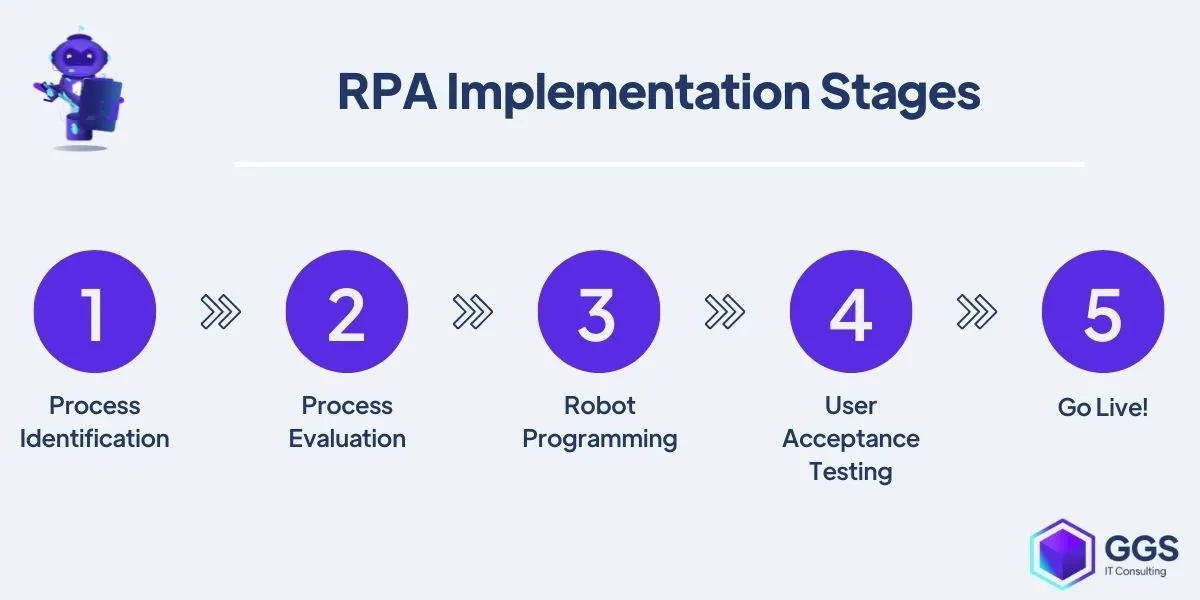
We used a classic five-stage RPA implementation model.
4.1 Process identification
Westwing came to us with an initially identified process for automation. The materials from the Westwing team showed a mature, process-based approach to operations. After a business-case and expected return-on-investment analysis, we assessed the process as a good candidate for RPA-based automation.
4.2 Process evaluation
After developing a process map and analyzing exceptions, we selected UiPath RPA technology. Its versatility and scalability met both the pilot-process needs and Westwing’s wider automation development plan. We proposed a pilot implementation as a proof of concept.
4.3 Robot programming
We created a task backlog from the estimate and detailed implementation plan. We then built the first robot process and delivered complete project documentation, including the Solution Design Document.
4.4 Acceptance testing
Acceptance tests in the client environment confirmed the assumptions from process identification and evaluation. After successful verification, the bot moved to production.
4.5 Go live
The RPA bot helps back-office employees determine final product prices and publish them to sales channels. It also creates capacity for future back-office automation. We continued technical support after implementation to ensure correct operation.
/ 5. Effects of implementation
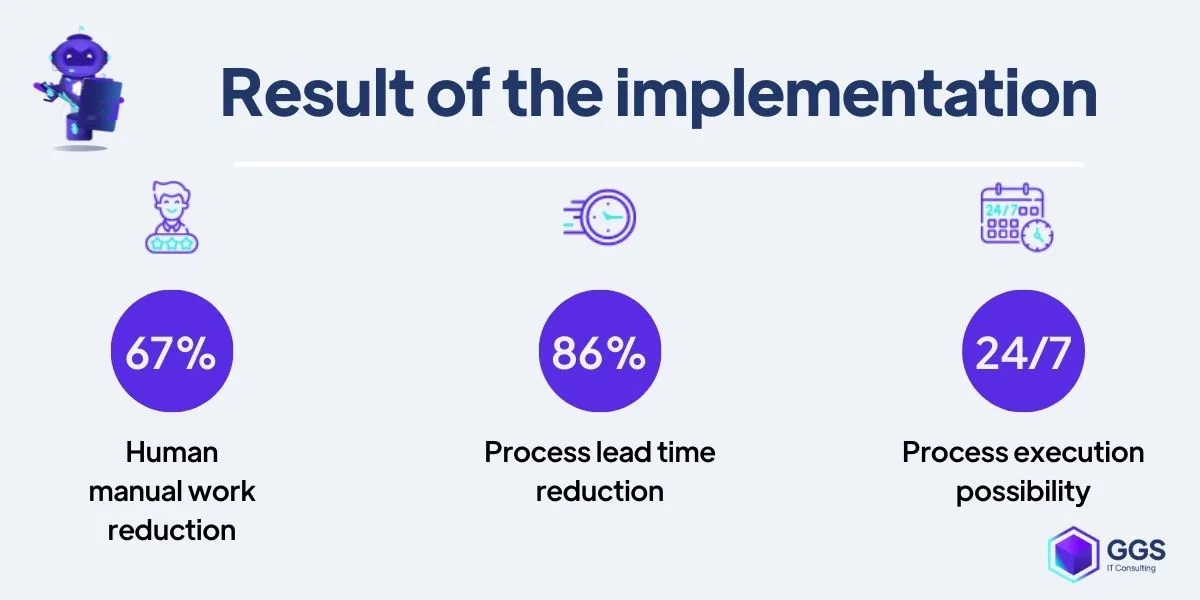
The most important automation effects were visible from the bot’s first day of operation:
- A process performed by a person dozens of times daily took five to ten minutes. Automation reduced this to three minutes. Sales-team waiting time fell from several hours to several minutes.
- The process now runs 24 hours a day, seven days a week.
- RPA implementation improved data structuring in other company areas.
- The robot drives continuous improvement. Exceptions reported by the robot give the Westwing team recommendations for improving input data. These improvements increase the robot’s effectiveness.
The robot can support further processes as Westwing expands its automation pipeline.
Let's talk
During the initial call, we'll analyze your most pressing operational challenges, understand how they're affecting your business efficiency, and identify a clear automation roadmap to solve them.