

Automation of the transportation orders process at Lindab

Summary
Sales and logistics transformation. 90% reduction in order processing time and 50% cost savings.
/ About Lindab
Lindab is an international group that develops, manufactures, and markets products and system solutions for ventilation, air conditioning, and construction. These include roofs and accessories, gutter systems, the Lindab SolarRoofTM photovoltaic system, and solutions for steel construction.

The company distributes its products internationally, operates in 20 markets, and employs more than 4,500 people.
/ The challenge
Lindab’s rapid growth, expanding offer, and market expansion increased the number of transportation orders sent by the Sales team to Logistics. The Sales team processed these orders manually by email.
Efficient transport organization became a major challenge. Email-only communication gave the teams little control and created errors that Logistics and Sales had to clarify. Lindab asked GGS IT Consulting to analyze transportation-order automation and propose a solution.
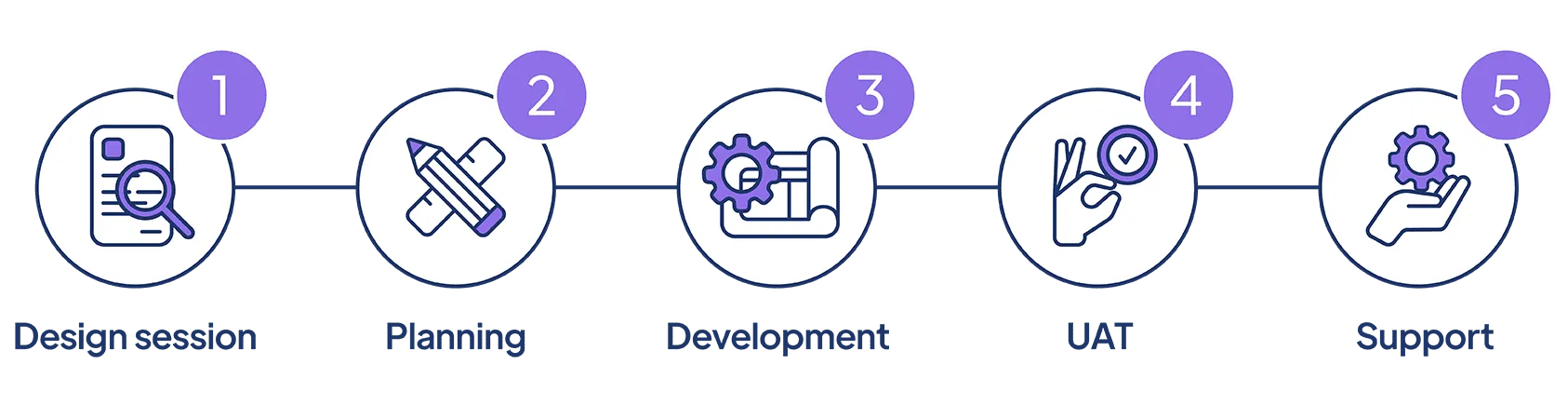
Our projects have five basic stages:
- Workshop to understand client needs.
- Planning to design and document project tasks.
- Development to build the solution.
- UAT to test results with the client.
- Support to help after production launch.
/ We started with a workshop
We held an onsite workshop at Lindab’s headquarters to understand the process, its organizational dependencies, and the data needed to carry it out.
We invited key representatives from:
- Management responsible for operations from a strategic perspective.
- The Logistics team that carries out transportation orders.
- Sales representatives who order transportation.
- The IT team responsible for technical aspects.
During the two-day workshop, we interviewed the teams, developed business assumptions, and defined application goals and expectations. The result was functional documentation covering the business description, process maps, technical architecture proposals, and data for automation. The workshop also confirmed the business case for the project.
/ What technologies did we use?
We recommended two technologies for process automation:
- Oracle APEX, a low-code platform for rapid business application delivery. It also integrated data from Lindab’s ERP system.
- UiPath, an RPA solution for manual work and data-entry automation.
Project scope
- A web application for Sales to create transportation orders.
- A web application for Logistics to group transports, visualize routes, and accept orders.
- Automation that generates transportation-order documents.
- Automation that launches warehouse operations.
/ How was the project implemented?
We involved Lindab throughout the project. Close cooperation helped us identify errors early, deliver faster, and respond to changes in the business environment.
We divided the work into five phases. Each phase delivered visible business value for Lindab to check and test. After testing, we made minor functional changes and improvements proposed by the Lindab team. We also held weekly activity and progress summaries with Lindab and GGS.
After delivery, the project entered user acceptance testing.
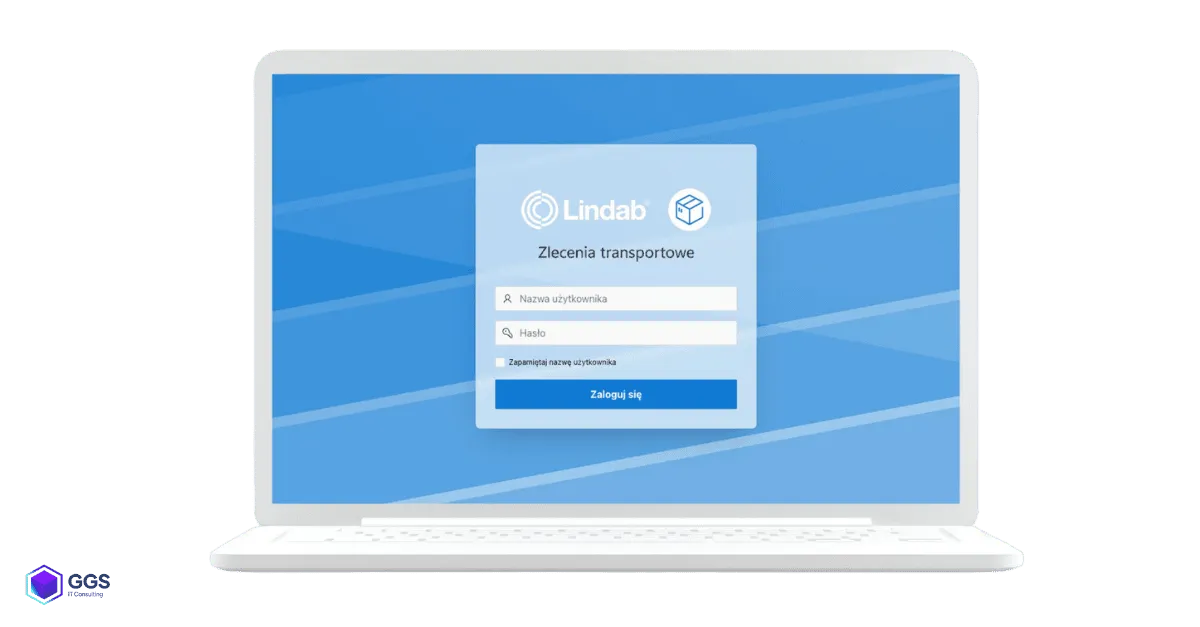
Designated Lindab team members used the application for transportation orders during testing. Their feedback identified usability improvements that we introduced in real time. After one month of acceptance testing, we launched the application for the full team.
/ Results
The project produced measurable improvements:
- 100% of transportation orders are now placed through the application, making information transparent and visible to both teams.
- Order-entry time decreased. Salespeople no longer complete the form manually. The ERP system suggests each field automatically.
- Dynamic forms and applications almost eliminate errors, reducing cases that need individual clarification.
- Automation monitors the process and business assumptions. The whole team now knows what to expect and how to act.
- The robot reduces the time for sending transportation orders to the warehouse. It generates transportation documents and starts warehouse procedures immediately after order approval.
- Data quality improved. Process standardization and automation improved Lindab system data, leading to more accurate reporting and planning.
Let's talk
During the initial call, we'll analyze your most pressing operational challenges, understand how they're affecting your business efficiency, and identify a clear automation roadmap to solve them.